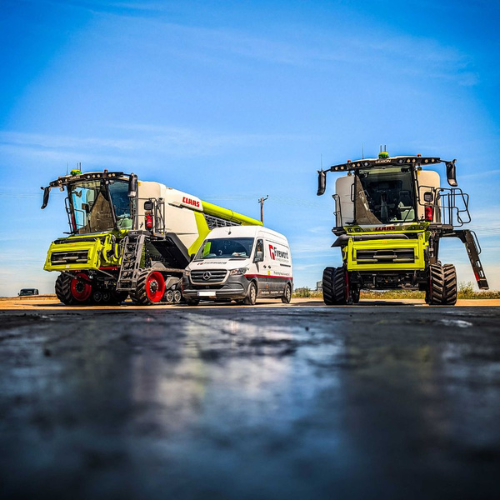
Whether you operate tractors, combine harvesters, balers or loaders, our team can help you explore suitable protection and coordinate getting a system installed.
A machinery fire can interrupt an entire season’s work. Beyond the damaged equipment, farmers can face missed weather windows, replacement costs and disruption when machinery is needed most.
With UK farm and agricultural vehicle fire losses estimated at £150 million in 2025, fire protection deserves attention well before the next harvest.
NFU MUTUAL – 2025 LOSSES
The cost of farm fires
£118m
£32m
£16.1m
£4.8m
Crop, building and farm equipment fire damage. Costs increased 18% on the previous year.
Additional losses from agricultural vehicle fires.
Vehicle fire losses attributed to tractors.
Vehicle fire losses attributed to combine harvesters.
Source: NFU Mutual’s 2026 Farm Fires Report, covering 2025. Figures describe estimated damage costs, not the number of fires. Tractor and combine losses form part of the £32m vehicle total.
01 / UNDERSTANDING THE RISK
Why agricultural machinery is vulnerable
Together, the reported losses amount to more than £400,000 a day. Hot, dry conditions heightened the risks, although farm fires have several causes, including electrical faults, arson and lightning.
Farm machinery brings heat, fuel, electrical components and combustible crop material into close proximity. During demanding operations, dry straw, chaff and dust can accumulate around hot components.
Fuel and hydraulic fluid leaks
Damaged wiring and electrical faults
Overheating bearings and slipping belts
Crop debris around hot components
Exhausts, turbochargers and diesel particulate filters can become ignition sources where crop debris collects. Hot, dry weather worsen these conditions, making cleaning, inspections and early fire detection particularly important
02 / MEET FIREWOOD
Protection designed around your machinery
Founded in 2010, Fireward supplies, installs and services automatic fire suppression systems across the UK. Its agricultural applications include tractors, combine harvesters, balers and loading machinery.
Fireward is an authorised distributor of its sister company, Reacton Fire Suppression, which manufactures the systems. Installations are tailored to the equipment and the areas requiring protection.
03 / HOW IT WORKS
Automatic detection. A rapid response.
Automatic suppression detects a fire and releases an extinguishing agent without waiting for an operator to act. Fireward offers two detection methods.
DETECTION METHOD 01
Pneumatic
A pressurised, heat-sensitive tube runs through identified risk areas. Sufficient heat causes it to rupture, activating the cylinder valve and releasing suppressant. This detection method does not require external electrical power.
DETECTION METHOD 02
Electronic linear
A heat-sensitive cable triggers the control unit when its activation temperature is reached, signalling the system to discharge.
Depending on the installation, suppressant is delivered directly through the detection tube or through separate hoses and nozzles positioned around the protected areas.
04 / SUPPRESSION AND COOLING
Why use a Duel Agent system?
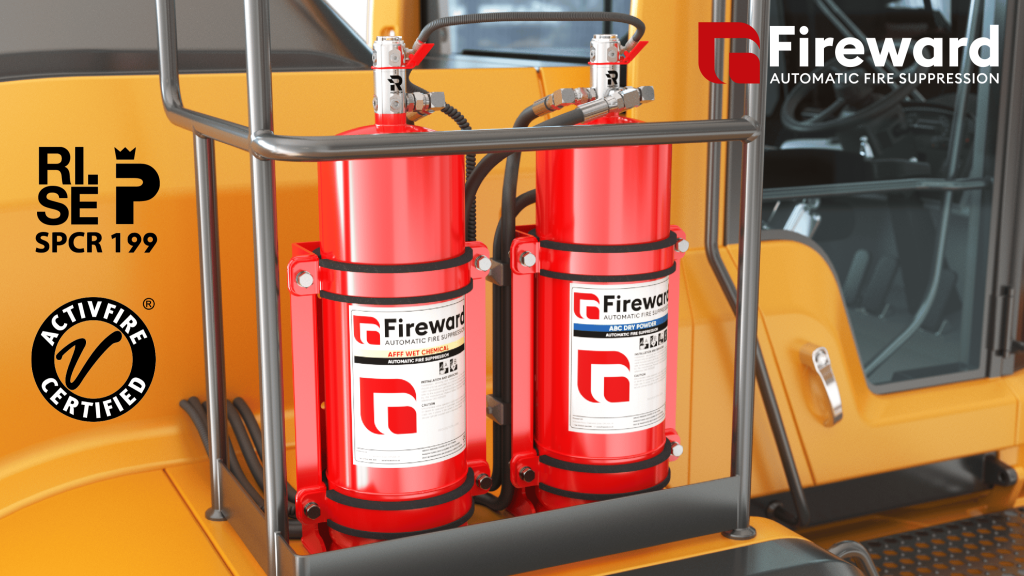
Fireward’s Duel Agent system uses dry powder to tackle flames and a wet chemical agent to cool hot surfaces. Cooling helps reduce the risk of re-ignition after the initial flames have been suppressed.
Two complementary actions: dry powder tackles the flames, while the wet agent cools hot surfaces.
Available additional features include in-cab monitoring, automatic engine shutdown, battery isolation and manual activation. Fireward can advise on the configuration suited to each machine.
05 / EXISTING EQUIPMENT
Can your current machinery be protected?
Fire suppression can also be considered for machinery already on farm. Fireward showcases a retrofit installation on a Case 9250 combine and a Duel Agent installation on a McHale V6 740 round baler.
These examples show how protection can be configured for different machines and their particular fire-risk areas. Suitability should be assessed for the individual machine.
Installing a suppression system is only the start. Fireward advises regular professional servicing, with intervals determined by the equipment and its working environment.
Its guidance describes six-monthly inspections, with some applications eligible for a 12-month interval. Owners should confirm the correct schedule with Fireward.
Daily checks between services
Examine detection tubing for damage
Check that nozzles remain clear
Confirm pressure gauges are in the green operating range
If a system discharges, contact Fireward for post-fire guidance and an engineer call-out. Anyone purchasing machinery with an existing Fireward installation should also register the change of ownership.
07 / THE WIDER PICTURE
Part of your farm's fire prevention plan
Automatic suppression complements regular machinery maintenance and good housekeeping. Continue removing crop debris, addressing leaks and electrical faults and ensuring everyone knows the farm’s emergency procedures.
Lets talk about protecting your machinery.
Interested in fitting a Fireward automatic fire suppression system? Contact our sales team to discuss your machinery and requirements. We can help you take the next step towards arranging a suitable system and installation.